
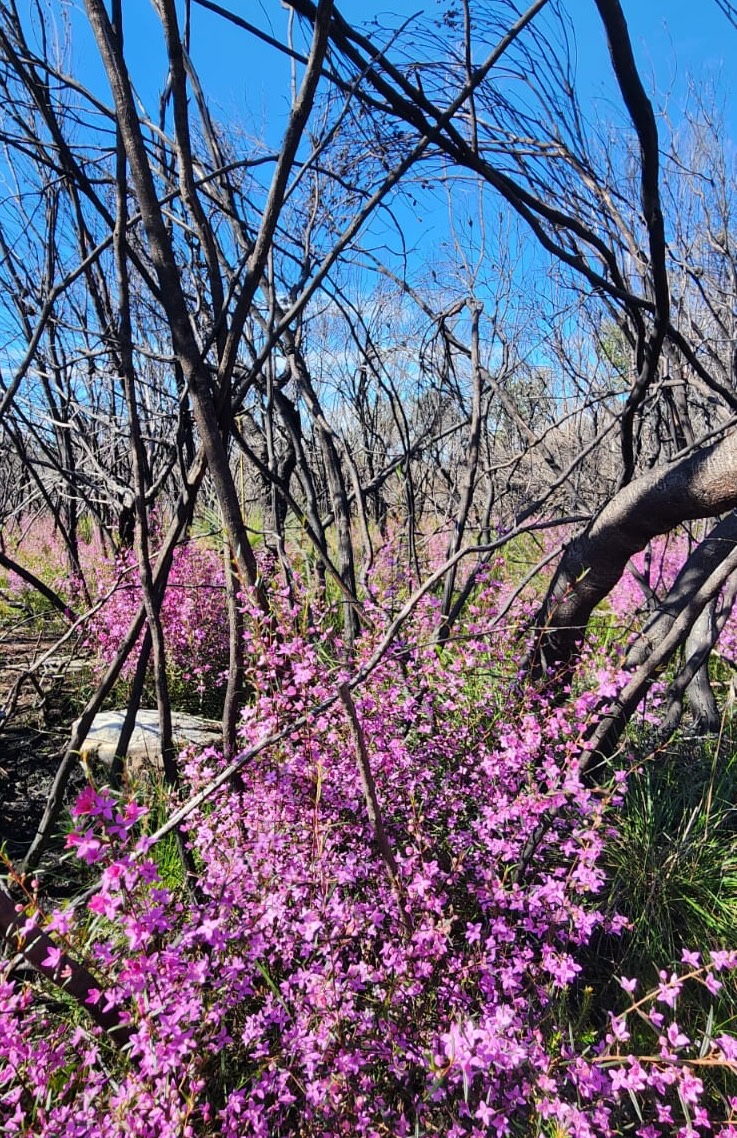

Manly Dam: Boronias in a charred landscape. (Credit: Aditi Das Patnaik)
These were some of the major headlines that caught my attention recently: ‘Dismal’ health of world’s forests is threat to humanity, report warns’; ‘IUCN finds 61% of the world’s bird species are in decline’. And closer to home in Australia ‘More clearing of koala habitat has been approved under Australia’s nature laws in 2025 so far than in any other year’.
And this isn’t even an unusual month for such news, it’s what we now consider normal.
So when I set out to write about conservation optimism, I found myself asking, ‘How does one hold onto hope amid this drumbeat of loss?’
As I often do when I need inspiration, I went for a walk in the bush.
I feel privileged to live in Sydney, where one is spoiled for choice with trails and reserves, surrounded by no fewer than five national parks. That day, I chose to return to a trail I’d been to several times, a state heritage park close to home — the Manly Warringah War Memorial State Park, known simply as “Manly Dam” to locals.
The first time I visited Manly Dam was in July 2024. Hazard reduction burns had left the trees lifeless, but signs of regrowth were everywhere. The boronias were out in full bloom, splashing pink across the blackened landscape as if determined to cheer it up. Green shoots were abundant and seemed to be rapidly taking over. At the time, I was grateful to have spaces like these so close to the city centre.
But like many of us, I had long taken these spaces for granted. Manly Dam changed that. Its quiet resilience drew me in, and soon after, I began volunteering for bushcare around the Dam.
At the outset, bushcare was hard work for someone used to sitting at a desk for upwards of 10 hours a day. It was back-breaking work – requiring me to get down and dirty in the soil, pulling weeds, planting, digging up the earth, removing hundreds of kilos of carelessly discarded rubbish in prime bushland and more. I constantly second guessed myself with my limited knowledge of Australian flora and asked one too many questions to the fellow volunteers, who always took the time to patiently explain names, identifying features and even interesting facts about them. They taught me to persevere.
Over time, I discovered the rich history behind this place — I met people who had fought for decades to keep Manly Dam wild. I came across stories of marches, protests, community festivals, and hard-won victories. There were people who had chained themselves to bulldozers, raised funds, and campaigned tirelessly to stop development. Their determination ensured that this pocket of bushland remained largely intact — a living legacy for future generations. In short, they inspired me immensely.
As I got more involved in volunteering, I got roped into the Manly Dam Biodiversity Project.
As part of the project, I worked with data collected by several ecologists and discovered just how rich this ecosystem is: over 1,100 species of plants and 420 species of mammals, birds, reptiles, and aquatic fauna — including a number that are threatened or endangered. The most challenging part of the project was not just to collate the data and offer it back to the community for awareness, research and education, but to get the community engaged. In order to do this, I applied for an Environment Grant from the Northern Beaches Council aimed as engaging a community at large to appreciate the biodiversity in Manly Dam. I called the project “Backyard Biodiversity”. I won the grant and am currently in the process of putting together the program including trying to make it accessible for the differently abled.

Manly Dam volunteers at Mermaid Pools
(Credit: Aditi Das Patnaik)
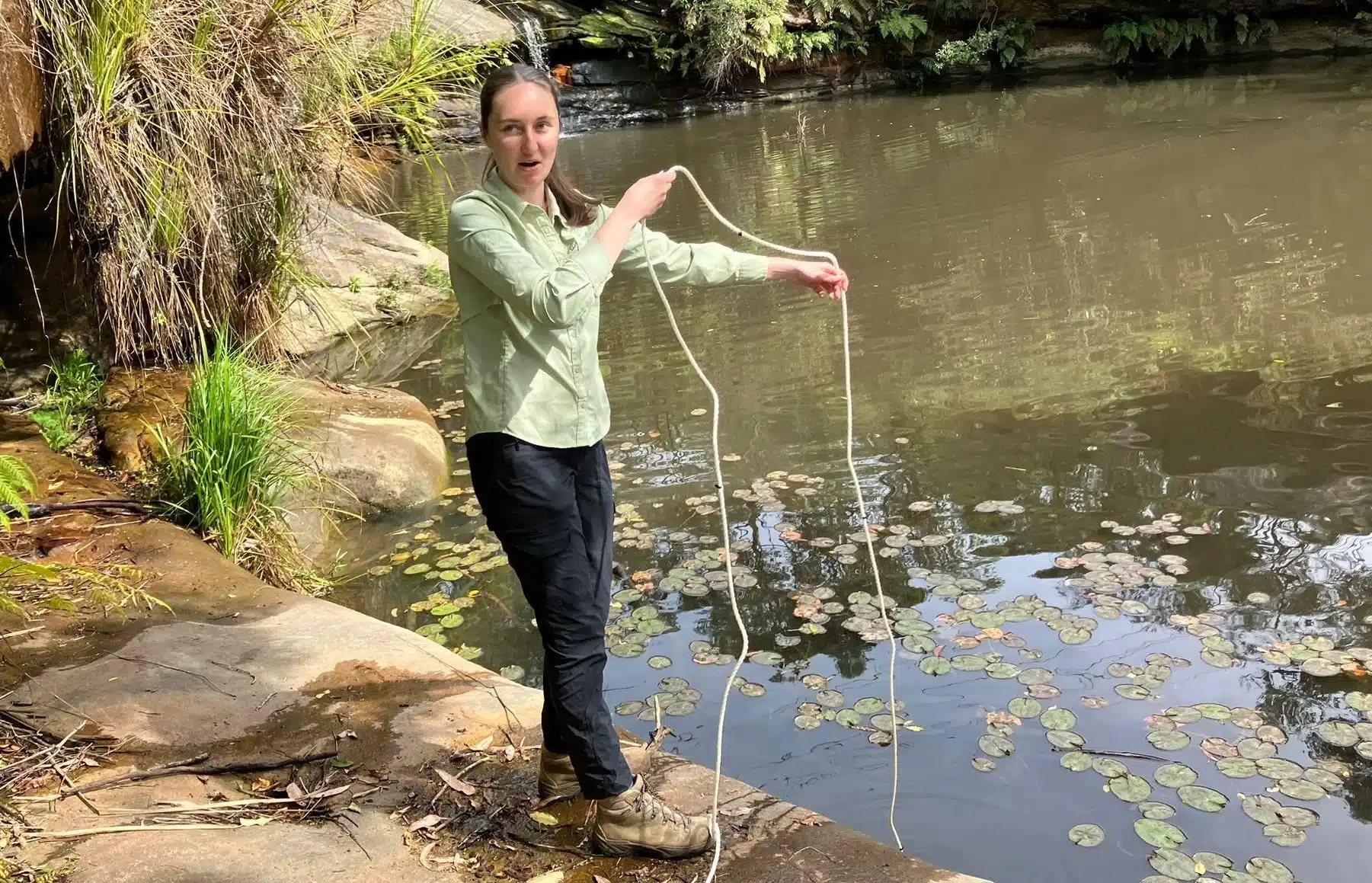
Data collection in progress
(Credit: Aditi Das Patnaik)
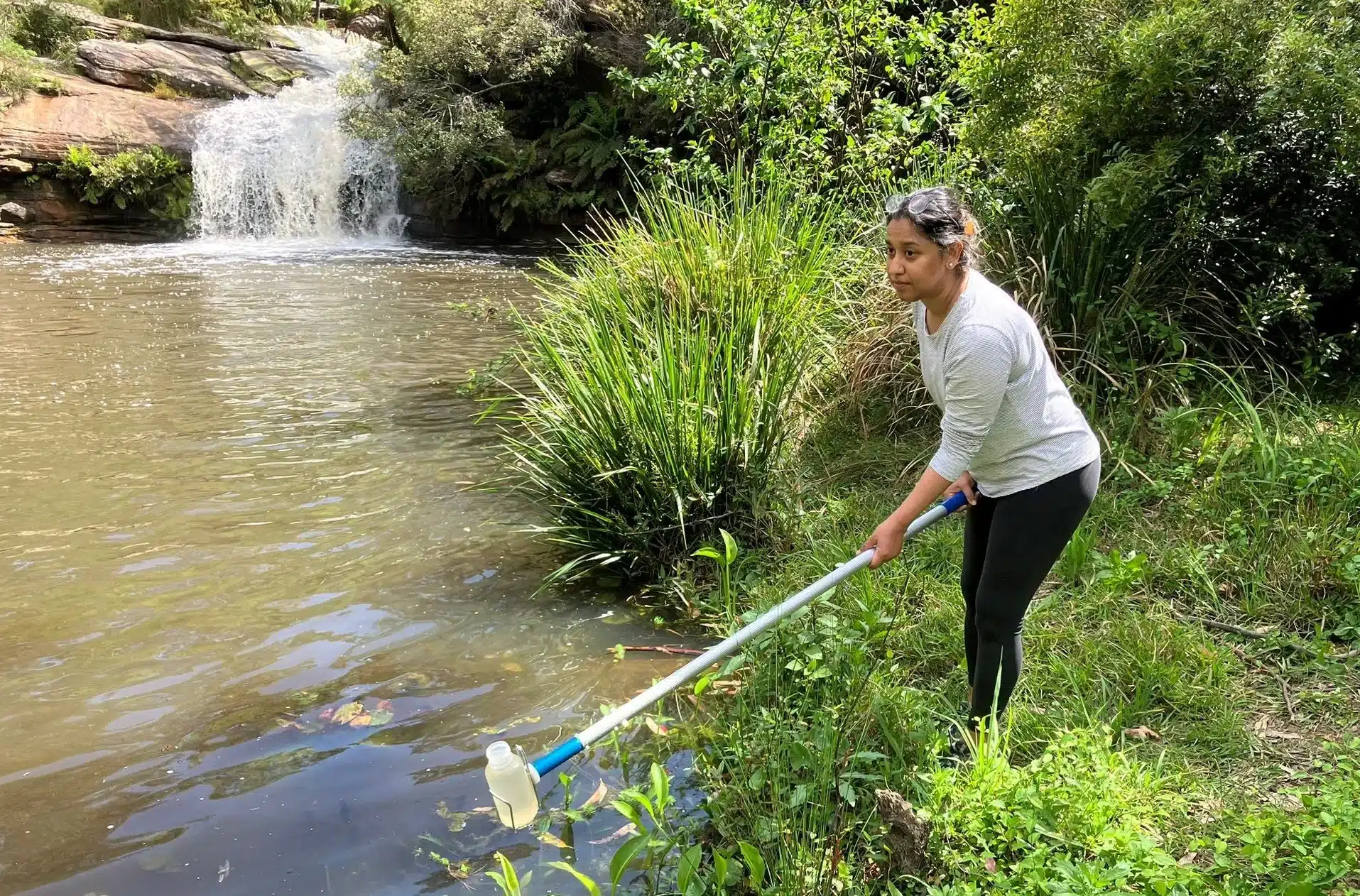
Water sample collection
(Credit: Aditi Das Patnaik)
More than a year later as I walk around the Manly Dam today and stop to look up at the canopy, which is flourishing now, I feel like I am standing on the proverbial shoulders of giants who have come before me and worked with the hope of keeping this land wild. The most important lesson through all of this work, was to show up and do just a little bit more each time, to trust the process and watch the magic unfold in time.
To paraphrase Joan Baez, taking action, however small, is the antidote to despair.
For me, when I read the relentless stream of grim environmental news, I take heart in knowing that I am part of a small, hopeful story — a community working quietly to protect a patch of bushland, ensuring it remains wild and thriving for generations to come.
That, to me, is what conservation optimism looks like: not just hoping that someone somewhere is taking action, but to show up with steady acts of care, no matter how small.

