
Wondering what went right this week in the conservation world? We’ve got you covered with our Conservation Optimism Round-Up! We are collating stories of optimism from around the globe so that you never miss your dose of weekly motivation. (Featured image credit: Luna sin estrellas on Flickr, Creative Commons)
1. SIPORAE TRIBE OF SOLOMON ISLANDS SELL CARBON CREDITS WHILST PROTECTING THEIR FORESTS
Siporae’s project has been approved to sell credits on the voluntary carbon market by Plan Vivo following international audits in 2025. Swiss-based climate foundation myclimate has purchased the first round of Siporae’s 2026-issued credits, alongside Sirebe’s credits.
By protecting the forest, the Siporae conserve pristine rainforest, biodiversity and provide a range of other ecosystem services provided by healthy forests.
By protecting the forest, the Siporae conserve pristine rainforest, biodiversity and provide a range of other ecosystem services provided by healthy forests. www.tavulinews.com.sb/siporae-trib...
— Society for Conservation Biology Oceania (@scboceania.org) April 7, 2026 at 4:31 AM
[image or embed]
2. “plug in” solar panels will save uk households £70 to £110 a year
Plug-in solar refers to low-cost panels that families can put on their balconies or outdoor spaces. Unlike traditional solar panels, which can be costly and complex to install, these panels are plugged directly into a mains socket like any other device, providing a home with free solar power. The appliances reduce the amount of electricity a household draws from the grid, thereby cutting a family’s energy bills.
Some good news The government have changed regulations to allow plug in solar panels, already very popular in Europe, without the need for an electrician They can be hung from a balcony and are simply plugged into a normal socket Cost is around £400 and will save around £70 per year
— Russell England (@russellengland.bsky.social) April 6, 2026 at 11:14 AM
[image or embed]
3. Indigenous led efforts are keeping ninu (bilbies) safe in australia
As bilbies, known as ninu to the Kiwirrkurra people (and Australia’s Easter Bunnies to others!), retreat into small desert pockets, Indigenous rangers are managing fire, predators and monitoring to help secure their future.
As bilbies, known as ninu to the Kiwirrkurra people (and Australia’s Easter Bunnies to others!), retreat into small desert pockets, Indigenous rangers are managing fire, predators and monitoring to help secure their future. www.australiangeographic.com.au/society/2026... #ConservationOptimism
— Society for Conservation Biology Oceania (@scboceania.org) April 5, 2026 at 4:31 AM
[image or embed]
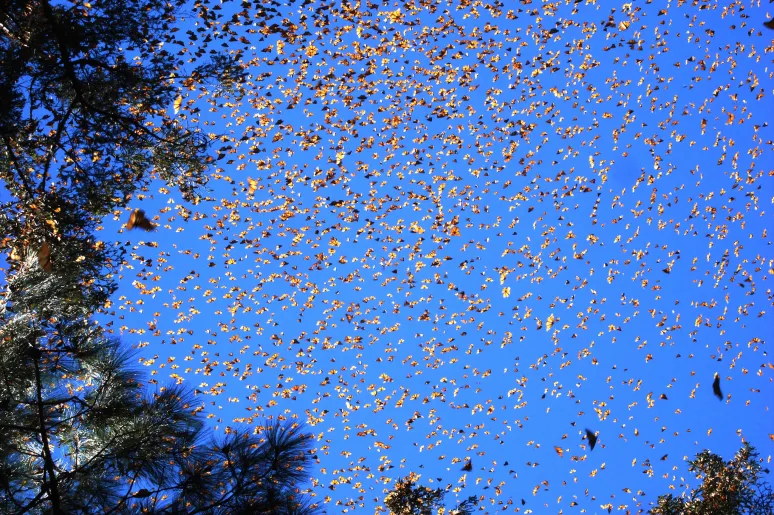
4. Endangered MONARCH BUTTERFLIES RECOVER DESPITE THREATS
Millions of butterflies continue to make the long journey between US, Canada and Mexico despite looming threats of climate crisis and habitat loss. In fact, their numbers have increased significantly. This season, scientists identified nine colonies spanning an area of approximately 2.9 hectares – a 64% increase from last year.
https://bsky.app/profile/just-jorj.bsky.social/post/3mirx7kkafk23
5. COUNTLESS ANIMALS’ LIVES SAVED BY WILDLIFE TUNNEL UNDER BUSY HIGHWAY
Before the construction of the tunnel, 77 animals were struck in just three years by the busy stretch of the highway in Santa Cruz County. After the building of the under crossing in 2023, only a single animal has been struck. The under crossing has saved countless mountain lions, deer, even skunks and allow them safe passage across their habitat.
#animals #wildlife #conservation #nature #hope #wecandothistogether ladyfreethinker.org/countless-an...
— Experts rock - we can do this together! 🌎🦅🐕🐈⬛🌱 (@expertsrock.bsky.social) April 8, 2026 at 4:18 AM
[image or embed]
6. Congo: More than a hundred dwarf crocodiles rescued from poaching and released in the wild
In 2025, 140 wild animals were saved from poaching and released into the Ndoki-Likouala landscape, a complex of protected areas covering an area of more than 34,000 km², larger than Belgium
#Congo : + d’une centaine de crocodiles nains sauvés du braconnage & relâchés dans la nature👏🏻👍🏻 En 2024, le crocodile nain était la 2e espèce sauvage la+braconnée dans cette aire protégée, selon l’ONG Wildlife conservation society.😱💔 #StopChasse #TirezLaChasse fr.mongabay.com/2026/04/cong...
— Marilyne 🐾 (@marilynechenuet.bsky.social) April 7, 2026 at 6:47 PM
[image or embed]
7. After harsh winter, Ukrainians find joy in releasing bats rescued from war
As night falls over a nature park on the edge of Kyiv, children crowd around volunteers who carefully open cloth bags and release bats into the twilight.
As each one takes flight, snapping through the air, more than 1,000 spectators cheer and applaud — families, off-duty soldiers, and bat enthusiasts, a few dressed in Goth outfits.
After harsh winter, Ukrainians find joy in releasing bats rescued from war #conservation #environment #wildlife #ukraine
— Good green news (@goodgreen.news) April 7, 2026 at 5:47 PM
[image or embed]
Have a story to share for our weekly round-up? Use #ConservationOptimism on Twitter, Facebook, LinkedIn and Instagram!
