
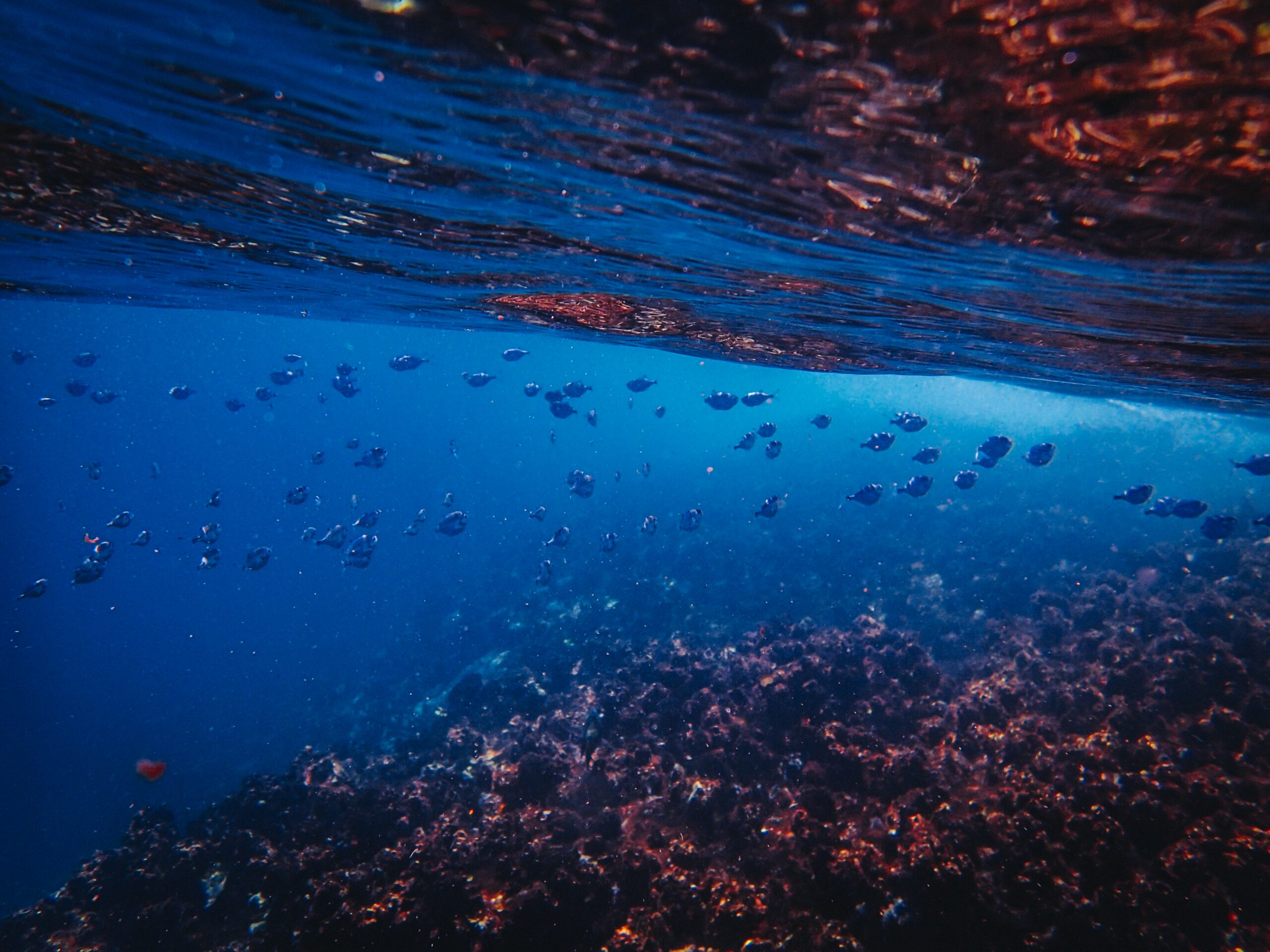
Wondering what went right this week in the conservation world? We’ve got you covered with our Conservation Optimism Round-Up! We are collating stories of optimism from around the globe so that you never miss your dose of weekly motivation.
(Featured image credit: Freepik)
1. Four Pacific nations are planning one of the world’s largest ocean corridors
“Four Melanesian countries are planning a network of marine reserves across one of the world’s richest stretches of ocean. Papua New Guinea, Vanuatu, and Fiji announced the Melanesian Ocean Corridor of Reserves in May. Solomon Islands joined in June.
Several large reserves could serve as anchors. Papua New Guinea is planning a 214,000-square-kilometer (82,626 square-mile) no-take sanctuary in western Manus, an area roughly the size of Great Britain. Vanuatu has announced a fully protected marine area covering 71,000 sq km (27,413 sq mi) around Torba Province. Fiji has pledged to protect 15% of its waters by the end of 2026.”
The full article can be found here.
2. Baby beavers born in Scotland’s ‘most beautiful glen’ for the first time in 400 years
“The birth of the kits follows the release of a first family of five beavers and a beaver pair at two sites on the loch in Glen Affric National Nature Reserve last October, and the release of a further family of four beavers in February.
Tobias Leask, Trees for Life’s locally based Beaver Management Officer, said “These beaver kits symbolise a wildlife success story four centuries in the making, and how nature can recover when we give it a chance.”
Baby beavers born in Scotland's 'most beautiful glen' for the first time in 400 years share.google/wyHc2nND754q...
— /Never Again (@montrose.bsky.social) July 30, 2026 at 1:34 PM
[image or embed]
3. Do-Good Dogs Fight Invasive Mussels on Team ‘Conservation Canines’
“Invasive species of Asian mussels have met their match in Alberta’s riverine sniffer dogs.
These K9 conservationists have been employed by the provincial government for over a decade to help catch zebra and golden mussels from colonising the rivers and lakes of Alberta.”
Do-Good Dogs Fight Invasive Mussels on Team ‘Conservation Canines’: Invasive species of Asian mussels have met their match in Alberta’s riverine sniffer dogs. These K9 conservationists have been… @goodnewsnetwork.org #Conservation #InvasiveSpecies #K9Conservation #GoodDogs #EnvironmentalProtection
— Donna E (@edwardsdna.bsky.social) August 4, 2026 at 10:13 AM
[image or embed]
4. Hundreds of species have been found living on former farmland bought by a charity following a £1.5m appeal.
“The 377-acre (152-hectare) site between Kettering and Bedford has now been found to contain half of Bedfordshire’s nightingales, as well as 11 bat species and 50 species of moss.
Chantelle Warriner, reserves officer, said: “Every visit seems to throw up new species and the more we can learn, the better we can plan the future management to ensure it stays rich in biodiversity.“
Hundreds of species identified at former farmland: The Wildlife Trust for Bedfordshire, Cambridgeshire and Northamptonshire acquired Strawberry Hill in 2024 after a £1.5 million appeal, preventing the land from returning to agriculture. Initial surveys have identifie… https://ranked.news/1176390?u=b
— Ranked News (@rankednews.bsky.social) July 26, 2026 at 11:30 AM
[image or embed]
5. California produced over half its May electricity from solar, a world record
“‘It’s wet here now, Kwandwe is looking beautiful,’ says [Doc] Ndyawe, a ranger at the 30,000-hectare Kwandwe Private Game Reserve. ‘But not even long ago, it was very dry here. Five years back it was almost like dust.’
“The Eastern Cape still boasts the rhinos, elephants and big cats that draw international tourists, partly thanks to a growing drive to restore the dense thickets that once blanketed its valleys and plains.
“At the heart of this push is spekboom (Portulacaria afra), a shrub or small tree that experts consider key to reviving vast areas extensively degraded by overgrazing, invasive species and drought, making both ecosystems and communities more resilient in the face of climate pressures.”
California produced over half its May electricity from solar, a world record @blancabegert.bsky.social www.latimes.com/environment/...
— Mark Z. Barabak (@markzbarabak.bsky.social) July 31, 2026 at 8:02 PM
[image or embed]
6. Africa’s off-grid solar sector courts mainstream investors with landmark financing deals
“Landmark fundraising deals by two of Africa’s largest off-grid solar companies are raising hopes that private capital markets could become a major source of funding to help bring electricity to millions of homes lacking access to reliable power.
A $50 million green bond issued by affordable energy company D.light in June, and $286 million in securitized debt by rival Sun King mid-2025 are testing whether institutional investors will back a pay-as-you-go business model on a commercial scale.”
. How African off-grid solar companies are using financing deals to land mainstream investors | AP News Find out more: apnews.com/article/grid-sol... #ClimateAction
— My Zero Carbon #ClimateAction (@myzerocarbon.org) August 5, 2026 at 12:00 PM
[image or embed]
7. Europe’s Air Quality Dramatically Improves in 10 Years, With 39-59% Drop in Industrial and Road Toxins
““Air quality continues to improve in Europe, with emissions of key air pollutants declining across the continent as a result of long-standing air quality policies, technological improvements, and cleaner industrial and transport systems,” said the report.
Since 2015, industrial emissions of sulphur oxides have fallen by 59%, while nitrogen oxide emissions from industry have declined by 39%.
Road transport emissions have also fallen substantially, with reductions of 40% for nitrogen oxides and 34% for fine particulate matter (PM2.5)“
. Europe’s Air Quality Dramatically Improves in 10 Years, With 39-59% Drop in Industrial and Road Toxins Find out more: www.goodnewsnetwork.org/eur... #ClimateAction
— My Zero Carbon #ClimateAction (@myzerocarbon.org) August 5, 2026 at 4:29 AM
[image or embed]
Have a story to share for our weekly round-up? Use #ConservationOptimism on Twitter, Facebook, LinkedIn and Instagram!
