
Wondering what went right this week in the conservation world? We’ve got you covered with our Conservation Optimism Round-Up! We are collating stories of optimism from around the globe so that you never miss your dose of weekly motivation. (Featured image credit: Kalyan Verma, Wikimedia Commons)

1. Forty new migratory species are now protected internationally!
Delegates at the COP15 summit on migratory species, under the UN Convention on the Conservation of Migratory Species of Wild Animals, accorded international protection to forty new migratory species, including the Snowy Owl, Hudsonian Godwit and Hammerhead Shark.
The UN Convention on the #Conservation of Migratory Species of Wild Animals (CMS) on Sunday approved the listing of 40 new #species for international protection, including the snowy #owl featured in the #HarryPotter saga. https://t.co/0Ia6bBISOR
— MUSER® PRESS (@muserpress) March 29, 2026
2. Bird Island’s Cape Gannet population reaches over 43000
South Africa’s Bird Island is hosting a soaring number of Cape Gannet, an endangered bird species breeding at just 6 sites globally.
“This kind of sustained occupancy is a positive sign for the species and for the marine environment that supports them,” said Dr Ashley Naidoo.
Early indications suggest this could be one of the strongest fledging seasons in recent years, with 7 647 fledglings already recorded and several weeks still remaining.
Cape gannet numbers soar past 43,000 🐦🌊Bird Island in Lambert’s Bay is now home to one of SA’s largest colonies, a major boost for an endangered species. Read Morehttps://t.co/RuJtspEvve#CapeTown #Conservation #Wildlife
— Cape Argus (@TheCapeArgus) March 29, 2026
3. Beavers ‘breathe new life’ into Dorset as dams built and biodiversity returns
They were released this time last year with fanfare, much hope and also, perhaps, a little trepidation.
Providing an end-of-year report, the National Trust, which is in charge of the project, said it was thrilled the beavers had been reshaping their new home in Dorset, where they have felled trees to construct a 35-metre dam, slowing the flow of a stream and creating a deep, wildlife-rich pool..”
Trail cameras have picked up an otter fishing in the pond as well as a barn owl hunting there, and volunteers have spotted birds including redpolls and water rails.
The cameras also captured footage of two of the beavers mating, which is being taken as a sign they have settled in their new home and that there could be kits this summer.
Beavers ‘breathe new life’ into Dorset as dams built and biodiversity returns https://t.co/nJYUqZDPUI#biodiversity #conservation #ecosystem #wildlife pic.twitter.com/PeOIaPeEyo
— SARAYA (@SarayaWorldwide) March 28, 2026
4. Rhinos Return to Uganda’s Kidepo Valley for the First Time in 43 Years
Southern white rhinos have been reintroduced to Uganda’s Kidepo Valley National Park, 43 years after the species was driven to local extinction. The historic translocation marks a major milestone in African conservation.
The Kidepo translocation follows an earlier reintroduction at Ajai Wildlife Reserve, where four rhinos were moved in January 2026. Sixteen more animals are planned for Ajai in the coming months to establish a viable founding population. Combined with the eight rhinos being phased into Kidepo, Uganda is rapidly rebuilding its rhino presence across multiple landscapes.
The story of Uganda’s rhinos is one of the most complete conservation arcs in modern history: total extinction, followed by patient decades of breeding, and now a species returning to landscapes it was driven from within living memory.
🦏 Rhinos Return to Uganda's Kidepo Valley After 43 Years
— The Good Press (@the_goodpress) March 27, 2026
👉 https://t.co/cr2Yzqm9eV#Conservation #Wildlife #GoodNews #TheGoodPress
5. Western Cape expands Protected Area network with over 20 new nature reserves
The Western Cape has taken a monumental step towards environmental conservation by integrating over 20 new nature reserves into its Protected Area network, securing more than 81,715 hectares of ecologically significant land.
The province’s recent achievements align closely with the Global Biodiversity Framework 30×30 initiative, which aims to formally protect 30% of the planet’s land and oceans by 2030. This global pact underscores the necessity for localised action in biodiversity preservation, an issue that resonates deeply with the residents of the Western Cape.
The Western Cape has taken a monumental step towards environmental conservation by integrating over 20 new nature reserves into its Protected Area network.#naturereserve #conservation #environnementhttps://t.co/gsIi1tYELx
— Weekend Argus (@WeekendArgus) March 25, 2026
6. Asian wild dog spotted in Vietnam for the first time in 20 years
Recent research has confirmed the first sighting of a dhole in more than two decades, a reddish-brown wild dog native to Asia. Before the sighting, the predator was believed to be extinct in Vietnam.
The dhole (Cuon alpinus), historically one of the most widespread large carnivores in Asia, was seen on camera-trap footage. The single adult was spotted in Pu Hoat Nature Reserve in Nghe An province on New Year’s Eve in 2023.
Before this sighting, the IUCN Red List considered the dhole locally extinct.
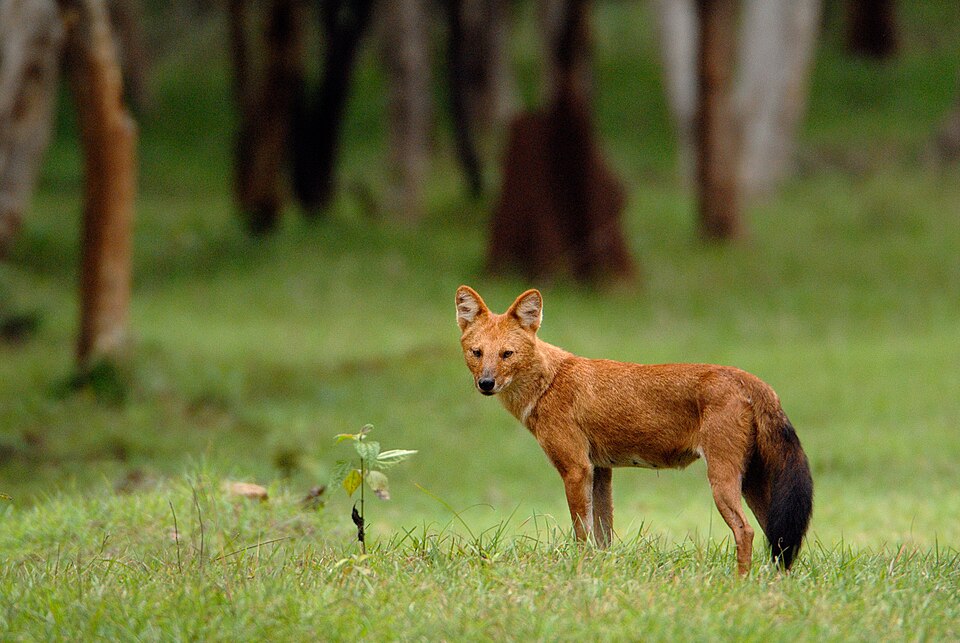
Image Credits: Kalyan Varma via Wikimedia Commons (CC BY-SA 4.0)
7. New species and rare wildlife found in Cambodia’s karst caves
A new biodiversity survey has revealed the vast array of species living within karst ecosystems in western Cambodia’s Battambang province.
Led by the Fauna & Flora-Cambodia Programme in collaboration with Cambodia’s Ministry of Environment, the survey’s most important findings include the discovery of species new to science, such as three new geckos, two micro-snails, and two millipedes.
The survey confirmed the presence of several globally threatened species, including the Sunda pangolin, Indochinese silvered langur, long-tailed macaque, and green peafowl.
New species and rare wildlife found in Cambodia’s karst caves#Biodiversity #Conservation #KarstEcosystems #CambodiaWildlife #BattambangNaturehttps://t.co/bBUVreXZO1
— Khmer Times (@KhmerTimes) March 24, 2026
Have a story to share for our weekly round-up? Use #ConservationOptimism on Twitter, Facebook, LinkedIn and Instagram!
