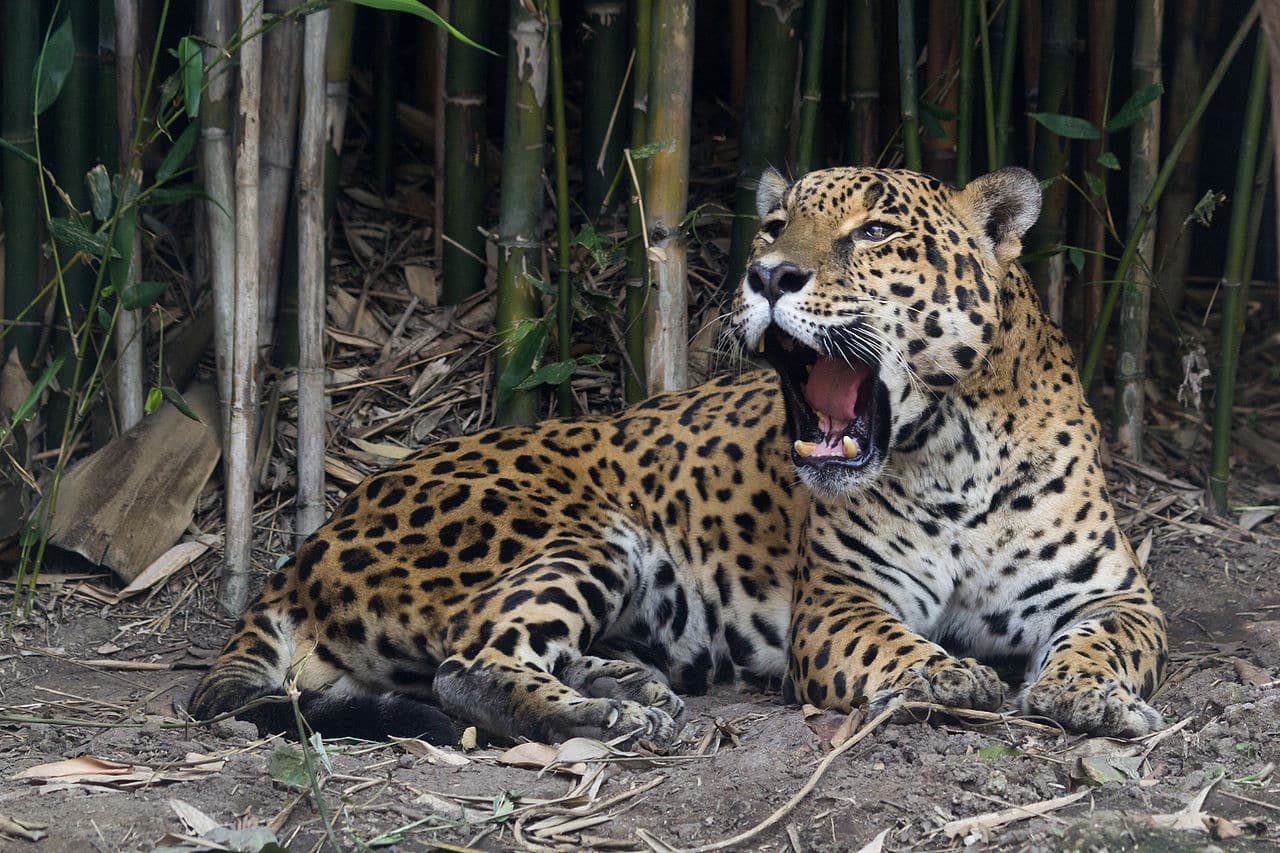
Wondering what went right this week in the conservation world? We’ve got you covered with our Conservation Optimism Round-Up! We are collating stories of optimism from around the globe so that you never miss your dose of weekly motivation. (Featured image credit: Katie Chan, Wikimedia Commons)
.jpg)
1. Giant tortoises return to Galápagos island after 180 years
“For the first time in nearly two centuries, giant tortoises are once again roaming Floreana Island in the Galápagos, a conservation milestone more than a decade in the making.” After researchers carried out DNA testing on a population of tortoises on Wolf Volcano, a site on a separate island near Floreana, they found that these were relatives of the Floreana Giant Tortoise who were hunted into extinction 180 years ago.
On Feb. 20, with support from local residents and a consortium of partners, 156 endangered tortoises were released. Each of them is between 10 and 13 years old. They will reach sexual maturity at roughly 25 years old, so building a self-sustaining population will take time.
For the first time in nearly 200 years, giant tortoises are roaming Floreana Island again. After finding surviving Floreana genes in tortoises on Wolf Volcano, scientists bred and released 156 juveniles — a key step toward restoring the island’s lost ecosystem.
— Mongabay (@mongabay.com) February 24, 2026 at 2:18 AM
[image or embed]
2. New state law in Illinois, co-written by local teens, requires high schoolers to learn about climate change
“Starting in the 2026-2027 school year, a new state law in Illinois will require every public high school to include instruction on climate change and the impacts and causes of climate change for grades nine through 12.
The law was written by two area students, alongside State Representative Janet Yang Rohr. “The legislation makes sure that people know that it’s happening, how it’s happened and, most importantly, what they can do to make a change,” Rep. Yang Rohr told NBC Chicago in 2024.”
A wonderful story on so many levels - teens write bill mandating climate education in Illinois high schools - my news to me good news for Feb. 19 #EarthOptimism https://t.co/5EAcp7x9V9
— Dr. Nancy Knowlton (@SeaCitizens) February 19, 2026
3. South Africa records 16% decline in rhino poaching
South Africa recorded a 16% drop in rhino poaching last year, the second consecutive decline of that magnitude, the environment ministry said on Tuesday.
The ministry said in a statement that 352 rhinos were killed for their horns in 2025, down from 420 in 2024 and 499 in 2023.
South Africa is home to nearly half of the critically-endangered black rhino population in Africa and to the world’s largest population of near-threatened white rhinos.
'There was a steep fall in poaching at the Hluhluwe-iMfolozi Park in KwaZulu-Natal province last year.' #rewilding #conservationoptimismhttps://t.co/nsToBtlLGD
— Citizen Zoo (@CitizenZoo) February 20, 2026
4. Baby boom continues for critically-endangered North Atlantic right whales
Every year, some North Atlantic right whales make a harrowing journey going from the feeding grounds in the chilly waters around New England and Canada to the warmer waters down south near the Carolinas, Georgia, and Florida where they give birth and nurse their young. This migration is not without challenges — the whales must avoid a jungle of roughly one million fishing lines along with vessel traffic. With only around 380 North Atlantic right whales remaining, each and every calf represents hope for the recovery of this critically endangered species.
See the video below from Oceana, and follow the link in the post to see all the adorable new mother and calf pairs!
Baby boom continues for critically endangered whales! 🐋 Another North Atlantic right whale mom, “Ghost,” & calf pair has been spotted — bringing this season’s total to 22 calves. Congrats Ghost! 💙 Meet all the mom & calf pairs: https://oceana.ly/4blsTlM
— Oceana (@oceana.bsky.social) February 17, 2026 at 4:26 AM
[image or embed]
5. Researchers eye jaguar conservation wins under Brazil Indigenous stewardship project
“The jaguar is listed as near threatened on the IUCN Red List due to threats such as habitat loss and overhunting, but finds a safe haven in Brazil within protected areas and Indigenous lands. A pioneering new Brazilian initiative seeks to strengthen the protection of 15 Indigenous territories and their biodiversity through land sovereignty, environmental restoration and monitoring.
The initiative, while still in its early stages, may benefit jaguar conservation in one of the big cat’s last remaining strongholds.”
Jaguars are listed as near threatened, but Brazil’s protected areas and Indigenous lands remain key refuges. A new initiative to strengthen 15 Indigenous territories could indirectly boost jaguar conservation, though links to species-focused programs are still emerging.
— Mongabay (@mongabay.com) February 20, 2026 at 4:01 AM
[image or embed]
6. Milestone for rewilding as ostriches return to Saudi Desert after 100-year absence
The red-necked ostrich, known historically as the “camel bird,” was reintroduced by ecologists at Saudi Arabia’s third-largest nature reserve. This critically endangered bird species, once celebrated by Arab poets and Roman scholars, has been extinct in the wild on the peninsula for 100 years.
“Returning such an iconic desert species after nearly a century carries deep emotional, ecological, and cultural significance,” Andrew Zaloumis, CEO of the Prince Mohammed bin Salman Royal Reserve, told Arab News.
“Returning such an iconic desert species after nearly a century carries deep emotional, ecological, and cultural significance” #rewilding #conservationoptimismhttps://t.co/NMbg70MzAn
— Citizen Zoo (@CitizenZoo) February 19, 2026
7. The UN high seas treaty is in effect!
Located more than 200 miles from shore and beyond the jurisdiction of any country, the high seas are among the largest reservoirs of ocean biodiversity. They make up two-thirds of the global ocean and cover nearly half of the planet. These waters support bountiful fisheries; serve as migratory routes for animals, such as whales and sharks; and harbor remarkable ecosystems, such as deep-water corals and other majestic marine life.
Fortunately, scientists have figured out reliable ways in which we can protect life on the high seas. By establishing marine protected areas (MPAs) that limit pollution, harmful fishing practices, and other destructive activities, we can safeguard biodiversity, protect top predators in order to maintain ecosystem balance, and build species resilience to climate change.
Check out the interactive page from Pew Research, linked in the post, outlining the importance of the treaty and Marine Protected Areas (MPA), and spread the word to protect the high seas.
ICYMI: The @UN high seas treaty has now entered into force! The agreement will help:
— Pew Environment (@pewenvironment) February 21, 2026
🐟Establish marine protected areas
👮Enforce sustainable practices
🤝Enhance global cooperation
See how the treaty could bring us closer to meeting #30x30. 👉 https://t.co/M2yf16XOYi pic.twitter.com/yu61ybFLuF
Have a story to share for our weekly round-up? Use #ConservationOptimism on Twitter, Facebook, LinkedIn and Instagram!