
As so many of us wrestle with extreme weather and other challenges, here’s our weekly reminder that, in our conservation world, there is great work being done by wonderful people.
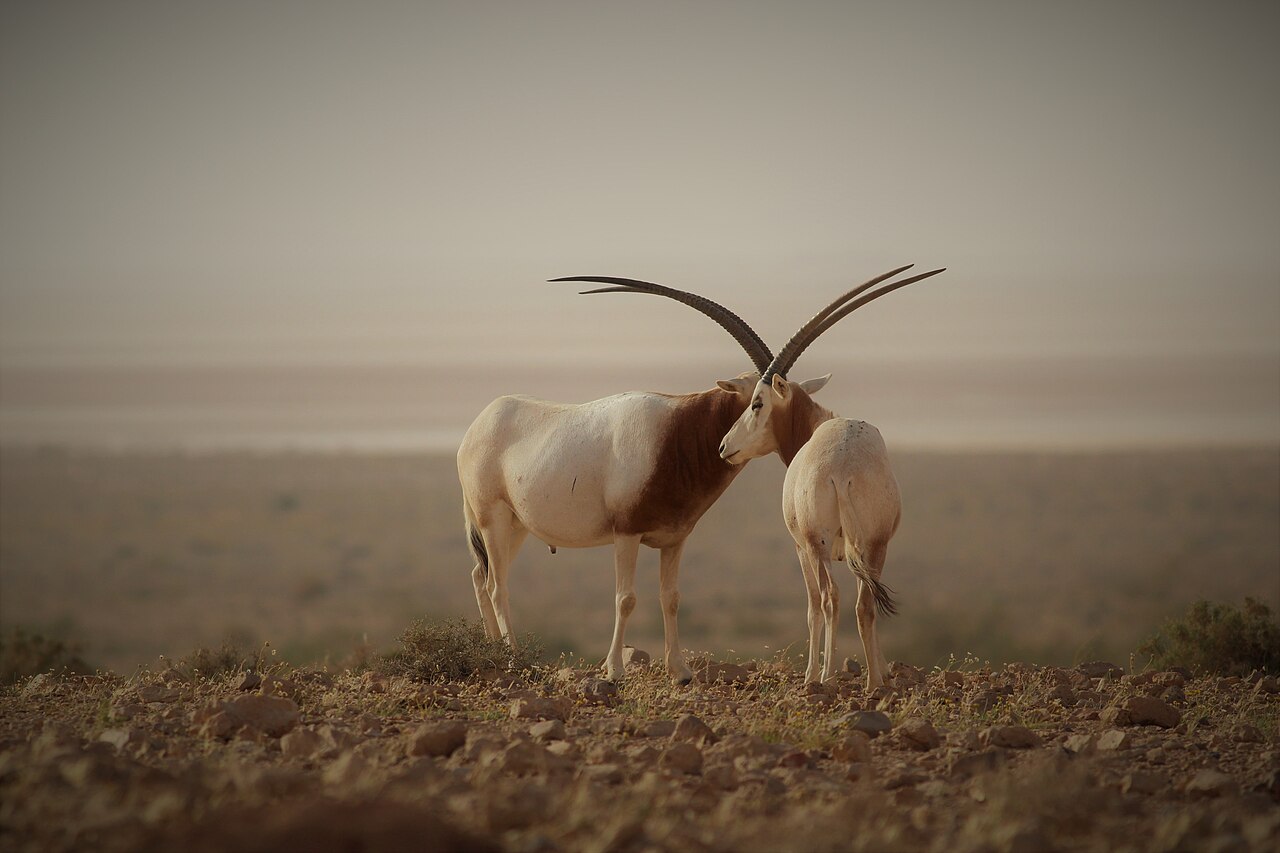
(Featured image credit: Scimitar-Horned Oryx (Oryx dammah) in Dghoumes National Park. Faouz Kilani, Wikimedia Commons)
1. First – a story of zoo conservation – Happy Scimitar Horned Oryx Day!
On August 16, zoos and aquariums (and many other people) celebrate not just a beautiful species of oryx, but a ground-breaking conservation success story; one of many instigated by the zoo community.
Once Extinct-in-the-Wild due to overhunting, overgrazing and desertification, the scimitar-horned oryx became re-established in the plains of Tunisia thanks to the incredible efforts of zoos and partnerships with NGOs and governing bodies.
“There are many world animal days – but this is the first one voted by the British and Irish zoo community!”
The Scimitar-Horned Oryx was nominated by Marwell Wildlife in the UK, and was selected in 2024 to bring a less recognised animal into the limelight.
2. The number of wild tigers in India has more than doubled since 1972.
🧐How come? 🌳India has added so many more tiger reserves. In 1973 they had nine and now they have 58. 😮The reserves now cover some 84,500 km² or an area the size of Austria. news.mongabay.com/2026/07/indi...
— The Progress Network (@progressntwrk.bsky.social) 17 August 2026 at 15:30
[image or embed]
3. Living proof damaged landscapes can recover’: exploring a vast restored forest in southern Sweden
Söderåsen national park is one of Europe’s largest protected broadleaf woods, offering wild swimming, spectacular hiking trails and an inspiring story of regeneration
‘Living proof damaged landscapes can recover’: exploring a vast restored forest in southern Sweden
— Guardian Environment (@environment.theguardian.com) 13 August 2026 at 08:02
[image or embed]
4. 100 species on the brink get a $200m conservation lifeline
From Madagascar’s golden-crowned sifaka to Mexico’s Charco Azul pupfish, 100 species facing extinction are getting a $200 million lifeline. The Phoenix Species Project will fund targeted conservation efforts across 30 countries to bring species back from the brink.
From Madagascar’s golden-crowned sifaka to Mexico’s Charco Azul pupfish, 100 species facing extinction are getting a $200 million lifeline. The Phoenix Species Project will fund targeted conservation efforts across 30 countries to bring species back from the brink. Learn more! 👇️
— Mongabay (@mongabay.com) 15 August 2026 at 16:40
[image or embed]
5. How rescued orangutans are rebuilding a new wild population in Sumatra
15 years ago, there were no orangutans in Jantho Nature Reserve. Today, it’s home to a growing wild population. Nearly 200 rescued and relocated orangutans have been brought to Jantho, and at least 10 babies born here.
But how do you build a wild orangutan population?
15 years ago, there were no orangutans in Jantho Nature Reserve. Today, it’s home to a growing wild population. Nearly 200 rescued and relocated orangutans have been brought to Jantho, and at least 10 babies born here. But how do you build a wild orangutan population? mongabay.cc/e37GO2
— Mongabay (@mongabay.com) 13 August 2026 at 17:14
[image or embed]
6. The return of the caspian tiger: how a species feared extinct has come back to Kazakhstan
The wild capture and release of a female big cat into a nature reserve is the first step towards reintroducing a population that hasn’t been seen for 70 years
The return of the caspian tiger: how a species feared extinct has come back to Kazakhstan
— Guardian Environment (@environment.theguardian.com) 11 August 2026 at 12:05
[image or embed]
7. And finally, some thoughts for the future from indigenous leaders… ‘This is what’s working”
To mark the International Day of the World’s Indigenous Peoples, Mongabay interviewed nine Indigenous leaders from around the world about climate solutions.
Their message is clear: bottom-up strategies rooted in local realities work, while top-down models often fail
To mark the International Day of the World’s Indigenous Peoples, Mongabay interviewed nine Indigenous leaders from around the world about climate solutions. Their message is clear: bottom-up strategies rooted in local realities work, while top-down models often fail. By @latoyaabulu.bsky.social.
— Mongabay (@mongabay.com) 11 August 2026 at 21:18
[image or embed]
Have a story to share for our weekly round-up? Use #ConservationOptimism on Twitter, Facebook, LinkedIn and Instagram!
