Wondering what went right this week in the conservation world? We’ve got you covered with our Conservation Optimism Round-Up! We are collating stories of optimism from around the globe so that you never miss your dose of weekly motivation.
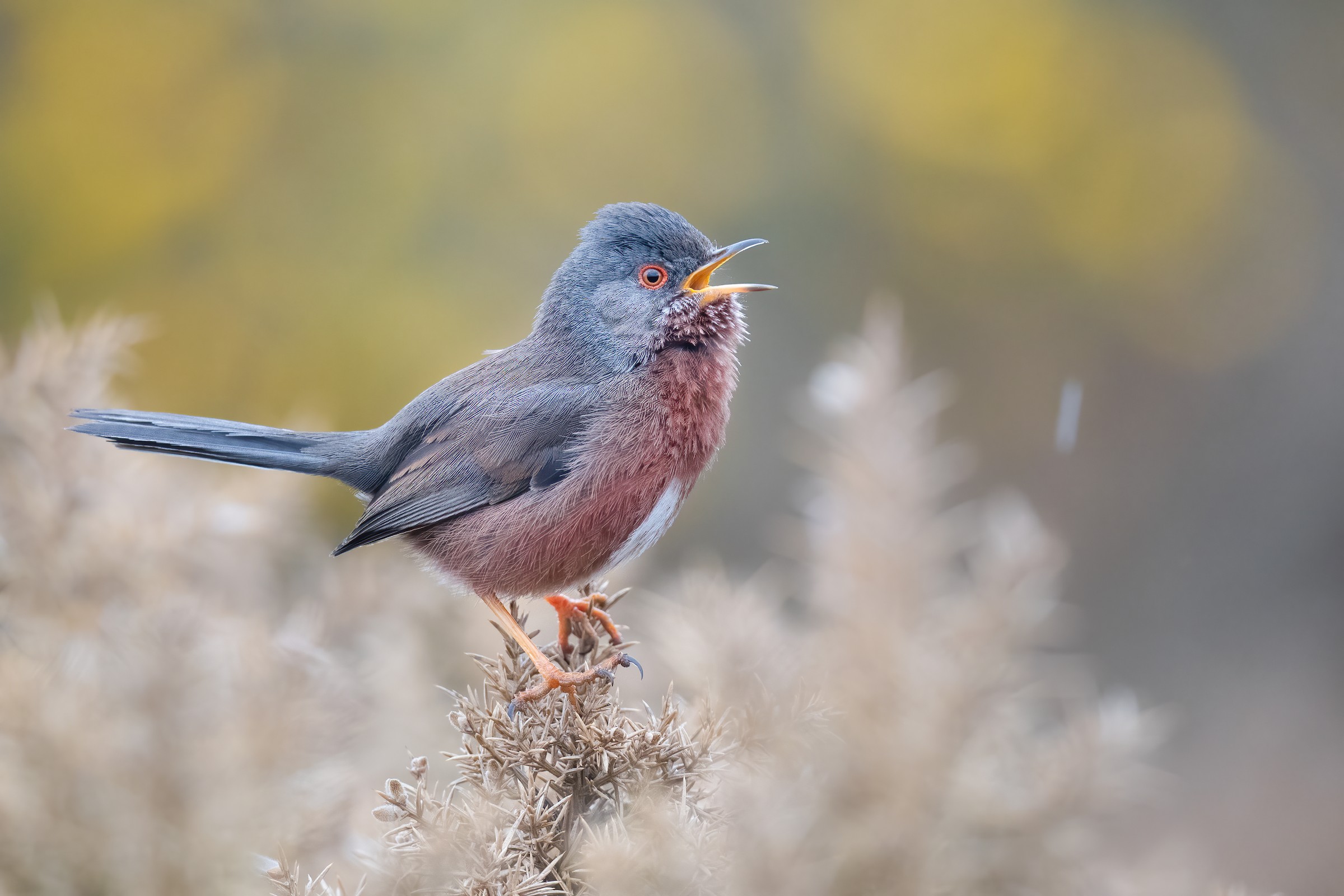
(Featured image credit: Dartford Warbler, Ben Lucking via eBird)
1. Thanks to legal protections, wolves are returning to the US West Coast
The grey wolf was once common across the West Coast of the US. As a keystone species, they regulate prey populations, prevent the spread of disease and ensure the health and well-being of the entire ecosystem where they live.
Today, the region is a crucial area for wolf recovery, and the fight is ongoing as organizations work to restore and introduce legal protections for this iconic species. Read on to learn more about the Center for Biological Diversity’s work to protect wolves, as part of the Pacific Wolf Coalition.
The return of wolves to the West Coast is an inspiring conservation success story – one made possible because legal protections have allowed them to disperse into new territories. At the end of 2025, there were 88 known wolf families across the three-state region. Learn more ➡️ biodiv.us/4dXGIWR
— Center for Biological Diversity (@biologicaldiversity.org) June 4, 2026 at 1:05 AM
[image or embed]
2. Mozambique completes first white rhino breeding population in decades
Decades of civil war had wiped out most of the wildlife in Mozambique’s Zinave National Park, but thanks to rhino reintroduction and ecosystem restoration efforts, the future is looking brighter for local species.
Critically endangered black rhinos were introduced to the park in 2016, alongside other endangered species. Being bulk grazers, they have been crucial to restoring the area by eating large volumes of grass, limiting wildfire risk as well as making the habitat more friendly for other species of grazers, insects, and birds.
Conservationists are hopeful that Zinave’s rhino populations could become ‘feeder populations’ for other parks in Mozambique as they continue to breed.
A 10-year restoration effort has transformed Zinave National Park. Following the June 6 arrival of nine white rhinos, the park now serves as a hub for ecosystem recovery. Beyond grazing to prevent wildfires, these rhinos are expected to serve as feeder populations for other parks.
— Mongabay (@mongabay.com) June 15, 2026 at 1:42 AM
[image or embed]
3. First live White abalone found in 5 years sparks hope for recovery
Populations of the White abalone (Haliotis sorenseni) have declined by 99% since the 1970s, and as the kelp forests they call home remain under threat, conservationists started the campaign Wanted Alive! White Abalone to invite groups and citizen scientists to help seek out the last remaining abalones.
The hope is that, through better understanding of where the animals live, they can attempt to relocate them to encourage successful reproduction and ensure the species’ future.
“It’s been like searching for a needle in a haystack,” explained Julie Bursek who is the education and outreach coordinator for Channel Islands National Marine Sanctuary.
“Community science, research partnerships, and habitat surveys like this one are all important tools for helping scientists better understand where white abalone may still survive in the wild.”

Image Credit: Athena Maguire, via GoodNewsNetwork
4. Large wetland property in Australia now owned and protected by indigenous group
‘A large property containing a unique wetland system in Australia’s Murray-Darling Basin was transferred into long-term Indigenous ownership in 2026 for conservation.
‘The 33,000-hectare (81,545-acre) property contains most of the Great Cumbung Swamp, located at the end of the Lachlan River in the state of New South Wales. The swamp has a mix of open water and reed beds, bordered by river red gum (Eucalyptus camaldulensis) woodlands, and is an important habitat for waterbirds, frogs, fish and reptiles.
‘The Nari Nari Tribal Council (NNTC), an Indigenous conservation land management organization, purchased the property in January 2026 following joint fundraising efforts by the conservation NGO The Nature Conservancy (TNC) and NNTC. James Fitzsimons of TNC recently wrote about the sale of the property in Oryx.’
Australia's Great Cumbung Swamp has been transferred to long-term Indigenous ownership. The Nari Nari Tribal Council now legally protect the 16,000 hectares of this ecosystem, reversing decades of logging and cattle grazing to restore critical habitat for threatened species.
— Mongabay (@mongabay.com) June 12, 2026 at 8:17 PM
[image or embed]
5. Record year for Dartford Warblers on RSPB nature reserves
‘The Amber listed Dartford Warbler previously suffered from a population crash in the 1960s, leaving only a few pairs in Dorset and the species on the brink of extinction in the UK. The most recent national survey has now revealed the highest ever number of Dartford Warblers recorded on RSPB nature reserves with 264 pairs counted in 2025 – a 44% increase in just five years.
‘Their comeback is thanks in part to conservation efforts carried out by RSPB nature reserve staff and volunteers to restore their precious heathland habitat.’
"Being able to hear those calls is the perfect reminder that the hard work is paying off. Helping to maintain then increase numbers, and reverse population declines of species like the Dartford Warbler is very rewarding.” #rewilding #conservationoptimismhttps://t.co/pHUnXzote5
— Citizen Zoo (@CitizenZoo) June 11, 2026
6. Marine life blossoms in Spain’s Menorca channel, thanks to protection efforts
In 2013, the advocacy group Oceana submitted a proposal to the government of Spain to protect the Menorca channel, backed by research that proved the region’s ecological value. The channel faced several threats from harmful practices in the fishing industry, such as ‘bottom trawling’, a destructive fishing method that damages fragile habitats and disrupts marine life.
Years of campaigning led the government of Spain to establish a protected area nearly 2,000km² in size, where bottom trawling and other harmful fishing methods are banned. Oceana reports: ‘Today, nine years later, science confirms that these protections are working. The Spanish Institute of Oceanography has documented the recovery and expansion of coralligenous habitats, maërl beds, and algae forests, directly linked to the ban on bottom trawling.’
However, there is a looming threat that these legal protections will be rolled back through new government proposals, undoing years of recovery. ‘The proposed changes are a reminder that defending existing protections is an ongoing effort, not a one-time win,’ states Oceana.
Once again, science shows that protection works!🌊✨ In 2016, after years of persistent advocacy from Oceana, Spain banned bottom trawling in the vibrant Menorca channel. And years later, science confirms that these protections are working! 👉 https://oceana.ly/3W4vK9A
— Oceana (@oceana.bsky.social) June 14, 2026 at 7:01 AM
[image or embed]
7. Across the world, mangrove forests are making a comeback
‘Mangrove forests, the imperiled ecosystems championed for their ability to store carbon and protect land from storm-driven flooding, are bouncing back.
These woodlands that thrive at the soggy boundary between land and sea suffered alarming declines through much of the 20th century, chopped down chiefly to make way for fish ponds, rice paddies and other kinds of agriculture. But in the last decade, mangroves have been gaining ground, erasing nearly all of the losses since 1980, according to research recently published in Science.’
The study, whose lead author is Dr Zhen Zhang of Tulane University, finds that mangrove forests have rebounded enough to nearly recover from losses dating back to the 1980s. Daniel Friess, a co-author of the study who heads The Mangrove Lab at Tulane, said, “While some mangroves are still being lost, this could make them a rare conservation success story and an important source of optimism for climate action.”
Mangroves are making a comeback. It’s a rare climate success story.. For decades, we've catalogued what we're losing to climate change. A sweeping new study offers something harder to find—evidence that one of the planet's most vital coastal ecosystem https://www.anthropocenemagazine.org/?p=241895
— Anthropocene Magazine (@anthropocenemag.bsky.social) June 10, 2026 at 11:46 PM
[image or embed]
Have a story to share for our weekly round-up? Use #ConservationOptimism on Twitter, Facebook, LinkedIn and Instagram!